Skip to content

Interventional radiology: a minimally invasive option for spine and joint pain

Spine or joint pain can severely limit your mobility, independence, and overall quality of life.

When medication, physical therapy, and other conservative treatments fail to provide sufficient relief, it is easy to assume that surgery is the only remaining option.

However, in many cases, interventional radiology offers a effective pre-surgical alternative: a group of minimally invasive, image-guided procedures designed to precisely target the exact root cause of your pain.

What is Interventional Radiology?

Interventional radiology (IR) is a specialized branch of medicine that utilizes advanced imaging technologies, such as ultrasound, X-rays, and CT scans, not only to diagnose conditions but also to guide targeted therapeutic treatments.

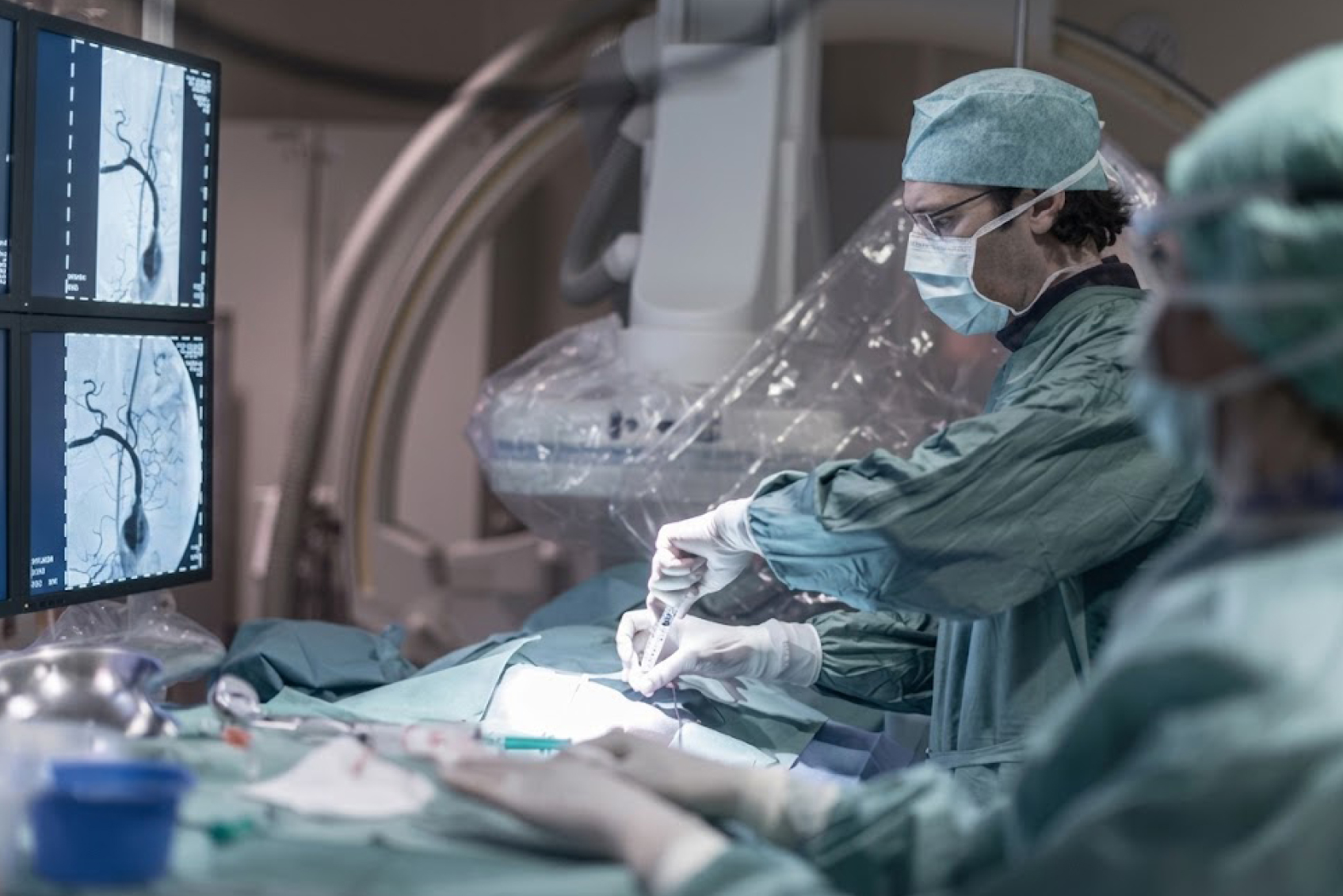
During an IR procedure, an interventional radiologist visualizes the affected anatomy in real time, inserting specialized needles or micro-instruments through tiny percutaneous (skin) punctures.

Image guidance ensures extreme precision: it allows the specialist to reach the exact tissue requiring treatment, monitor instrument placement, and minimize damage to surrounding healthy structures.

The core value of interventional radiology lies in combining diagnostic accuracy with procedural expertise, using medical imaging not just to identify the problem, but as a direct tool for healing.

When ss Interventional Radiology recommended?

Interventional radiology procedures are used to manage a wide variety of painful conditions affecting the spine, joints, and surrounding soft tissues.

Whether a patient is a candidate for these procedures depends on several factors:

  • The source, severity, and duration of the pain
  • Functional and mobility limitations
  • Diagnostic imaging findings (MRI, CT, X-ray)
  • Previous response to conservative therapies
  • Overall health status and medical history

It is important to note that not all spine or joint pain can be treated with these techniques. Successful outcomes require a clear correlation between patient symptoms, clinical evaluation, and imaging results.

For this reason, an MRI or CT report alone is not enough to determine the right treatment plan.

Interventional Radiology applications for the spine

Spinal pain can stem from degenerative disc disease, inflammation, nerve root irritation, facet joint disorders, or vertebral fractures.

Depending on the underlying diagnosis, an interventional radiologist may recommend:

  • Targeted pain-relief injections (e.g., epidural steroid injections)
  • Facet joint treatments and radiofrequency ablation
  • Nerve block procedures for radicular pain (sciatica)
  • Percutaneous treatments for painful vertebral compression fractures

Among these, percutaneous vertebroplasty involves injecting specialized medical cement into a fractured vertebra using a thin needle under real-time radiological guidance to stabilize the bone and relieve pain.

Note: Vertebroplasty is not suitable for all types of fractures and requires careful patient screening.

Targeted treatments for joint and musculoskeletal pain

Image-guided infiltrative procedures are also highly effective for chronic joint and periarticular conditions.

Using ultrasound or fluoroscopic guidance, the specialist directly visualizes the targeted joint, tendon, or bursa, delivering medication precisely where it is needed most.

Common application sites include:

  • Shoulders, hips, knees, and ankles
  • Tendons, bursae, and deep anatomical structures that are difficult to target accurately without imaging guidance

The ideal procedure depends on a comprehensive clinical evaluation, diagnostic findings, and the presence of any contraindications.

Is Interventional Radiology an alternative to surgery?

Interventional radiology does not completely replace surgery in every clinical scenario.

For many patients, these procedures can significantly reduce pain, restore mobility, and delay, or even eliminate, the need for invasive surgical intervention. For others, interventional radiology works best as part of a comprehensive care plan alongside physical therapy, rehabilitation, and medication.

However, traditional surgical evaluation remains essential in cases involving severe neurological deficits, spinal instability, major deformities, or advanced structural damage.

The goal is not to avoid surgery at all costs, but rather to identify the most effective, least invasive treatment tailored to each patient’s individual needs.

Key benefits of image-guided procedures

When properly indicated, interventional radiology offers significant benefits:

  • High precision via real-time medical imaging
  • Minimally invasive percutaneous entry points (no major incisions)
  • Minimal disruption to surrounding healthy tissues
  • Faster recovery times compared to conventional surgery
  • Outpatient convenience (most procedures are performed on a day-hospital basis)

As with any medical procedure, potential risks and contraindications exist and will be thoroughly discussed prior to treatment.

The importance of a specialist evaluation

Before recommending a procedure, the interventional radiologist reviews the patient’s medical history, pain characteristics, prior therapies, and imaging scans.

When necessary, care plans are co-developed alongside orthopedists, physiatrists, neurosurgeons, and physical therapists.

Interventional radiology is not a standalone quick fix, but an integral part of a coordinated, multidisciplinary approach to care. Understanding these options empowers patients to make informed decisions about their healthcare journey before considering open surgery.

To learn more about diagnostic and interventional radiology services at MiniHospital “Sandro Pertini”:

📞 0587 609134
✉️ info@minihospital.it
📍 Via Antonio Gramsci 29, Capannoli

Interventional radiology: a minimally invasive option for spine and joint pain

Spine or joint pain can severely limit your mobility, independence, and overall quality of life.

When medication, physical therapy, and other conservative treatments fail to provide sufficient relief, it is easy to assume that surgery is the only remaining option.

However, in many cases, interventional radiology offers a effective pre-surgical alternative: a group of minimally invasive, image-guided procedures designed to precisely target the exact root cause of your pain.

What is Interventional Radiology?

Interventional radiology (IR) is a specialized branch of medicine that utilizes advanced imaging technologies, such as ultrasound, X-rays, and CT scans, not only to diagnose conditions but also to guide targeted therapeutic treatments.

During an IR procedure, an interventional radiologist visualizes the affected anatomy in real time, inserting specialized needles or micro-instruments through tiny percutaneous (skin) punctures.

Image guidance ensures extreme precision: it allows the specialist to reach the exact tissue requiring treatment, monitor instrument placement, and minimize damage to surrounding healthy structures.

The core value of interventional radiology lies in combining diagnostic accuracy with procedural expertise, using medical imaging not just to identify the problem, but as a direct tool for healing.

When ss Interventional Radiology recommended?

Interventional radiology procedures are used to manage a wide variety of painful conditions affecting the spine, joints, and surrounding soft tissues.

Whether a patient is a candidate for these procedures depends on several factors:

  • The source, severity, and duration of the pain
  • Functional and mobility limitations
  • Diagnostic imaging findings (MRI, CT, X-ray)
  • Previous response to conservative therapies
  • Overall health status and medical history

It is important to note that not all spine or joint pain can be treated with these techniques. Successful outcomes require a clear correlation between patient symptoms, clinical evaluation, and imaging results.

For this reason, an MRI or CT report alone is not enough to determine the right treatment plan.

Interventional Radiology applications for the spine

Spinal pain can stem from degenerative disc disease, inflammation, nerve root irritation, facet joint disorders, or vertebral fractures.

Depending on the underlying diagnosis, an interventional radiologist may recommend:

  • Targeted pain-relief injections (e.g., epidural steroid injections)
  • Facet joint treatments and radiofrequency ablation
  • Nerve block procedures for radicular pain (sciatica)
  • Percutaneous treatments for painful vertebral compression fractures

Among these, percutaneous vertebroplasty involves injecting specialized medical cement into a fractured vertebra using a thin needle under real-time radiological guidance to stabilize the bone and relieve pain.

Note: Vertebroplasty is not suitable for all types of fractures and requires careful patient screening.

Targeted treatments for joint and musculoskeletal pain

Image-guided infiltrative procedures are also highly effective for chronic joint and periarticular conditions.

Using ultrasound or fluoroscopic guidance, the specialist directly visualizes the targeted joint, tendon, or bursa, delivering medication precisely where it is needed most.

Common application sites include:

  • Shoulders, hips, knees, and ankles
  • Tendons, bursae, and deep anatomical structures that are difficult to target accurately without imaging guidance

The ideal procedure depends on a comprehensive clinical evaluation, diagnostic findings, and the presence of any contraindications.

Is Interventional Radiology an alternative to surgery?

Interventional radiology does not completely replace surgery in every clinical scenario.

For many patients, these procedures can significantly reduce pain, restore mobility, and delay, or even eliminate, the need for invasive surgical intervention. For others, interventional radiology works best as part of a comprehensive care plan alongside physical therapy, rehabilitation, and medication.

However, traditional surgical evaluation remains essential in cases involving severe neurological deficits, spinal instability, major deformities, or advanced structural damage.

The goal is not to avoid surgery at all costs, but rather to identify the most effective, least invasive treatment tailored to each patient’s individual needs.

Key benefits of image-guided procedures

When properly indicated, interventional radiology offers significant benefits:

  • High precision via real-time medical imaging
  • Minimally invasive percutaneous entry points (no major incisions)
  • Minimal disruption to surrounding healthy tissues
  • Faster recovery times compared to conventional surgery
  • Outpatient convenience (most procedures are performed on a day-hospital basis)

As with any medical procedure, potential risks and contraindications exist and will be thoroughly discussed prior to treatment.

The importance of a specialist evaluation

Before recommending a procedure, the interventional radiologist reviews the patient’s medical history, pain characteristics, prior therapies, and imaging scans.

When necessary, care plans are co-developed alongside orthopedists, physiatrists, neurosurgeons, and physical therapists.

Interventional radiology is not a standalone quick fix, but an integral part of a coordinated, multidisciplinary approach to care. Understanding these options empowers patients to make informed decisions about their healthcare journey before considering open surgery.

To learn more about diagnostic and interventional radiology services at MiniHospital “Sandro Pertini”:

📞 0587 609134
✉️ info@minihospital.it
📍 Via Antonio Gramsci 29, Capannoli

Le ultime news

The latest news

20260702_minihospital_BLOG_cuore bambini_l (2)

When discussing cardiovascular health, the topic is often associated exclusively with adulthood. Indeed, conditions such…

Vertigini - un sintomo da non sottovalutare - MiniHospital

It is common to describe it simply as "dizziness," but vertigo is a more complex…

Minihospital-Chirurgia Ricostruttiva

Following oncological surgery, trauma, or a skin lesion, the body may undergo changes affecting both…

20260702_minihospital_BLOG_cuore bambini_l (2)

When discussing cardiovascular health, the topic is often associated exclusively with adulthood. Indeed, conditions such…

Vertigini - un sintomo da non sottovalutare - MiniHospital

It is common to describe it simply as "dizziness," but vertigo is a more complex…

Minihospital-Chirurgia Ricostruttiva

Following oncological surgery, trauma, or a skin lesion, the body may undergo changes affecting both…

Back To Top